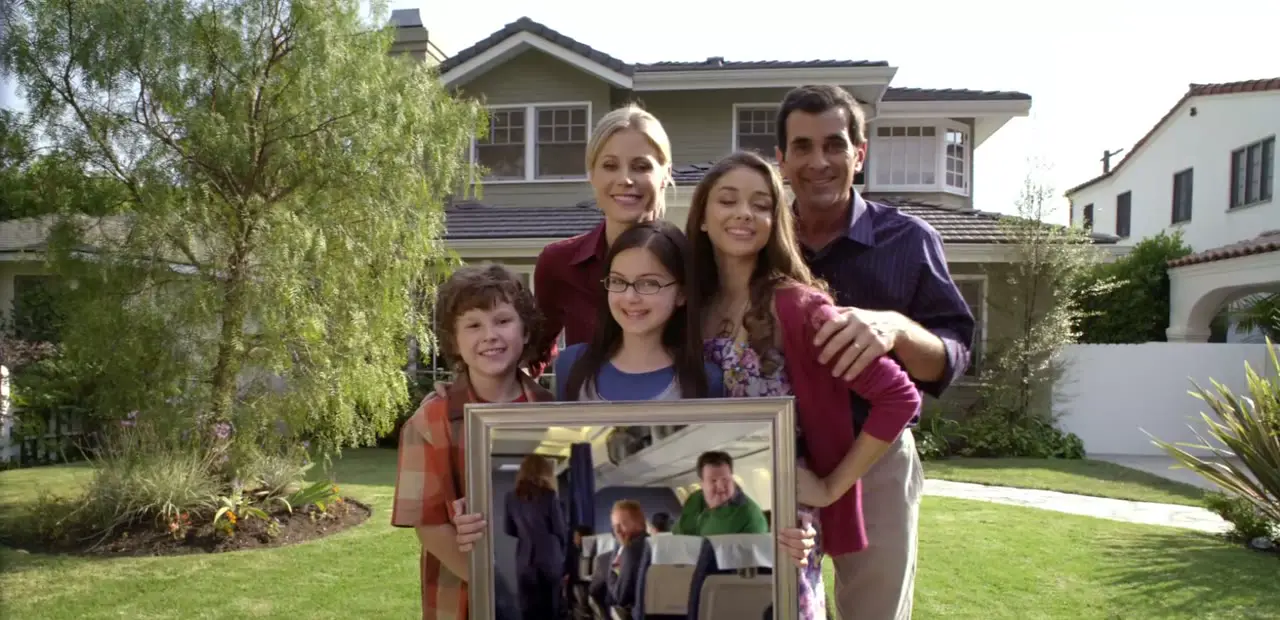
邓菲家 The Dunphys
- 克莱尔 Claire:控场型妈妈,语速快、句子短、命令句多
- 菲尔 Phil:自封"酷老爸",爱抖机灵,常常抓不住重点
- 海莉 Haley:15 岁叛逆长女,满嘴青少年口头禅
- 艾丽克斯 Alex:学霸次女,冷静毒舌
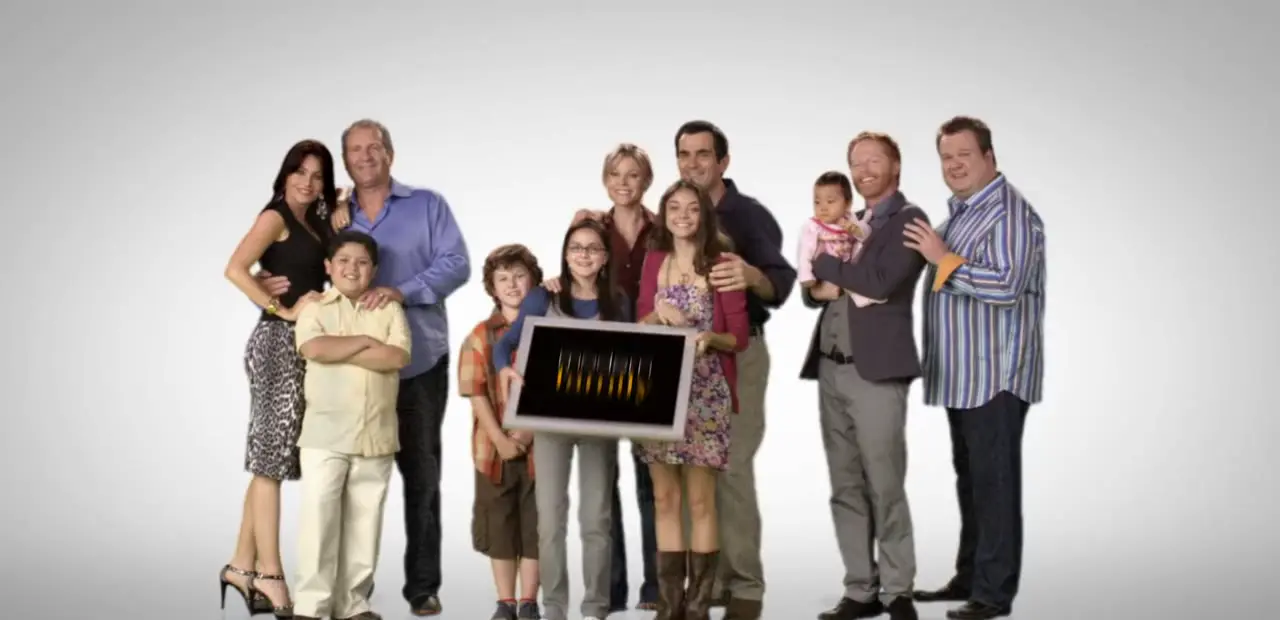
三个家庭,一部伪纪录片。本期精学开场三场戏(00:00–04:03):早餐桌上的着装大战、球场边的哥伦比亚辣妈、飞机上的"奶油泡芙"风波。
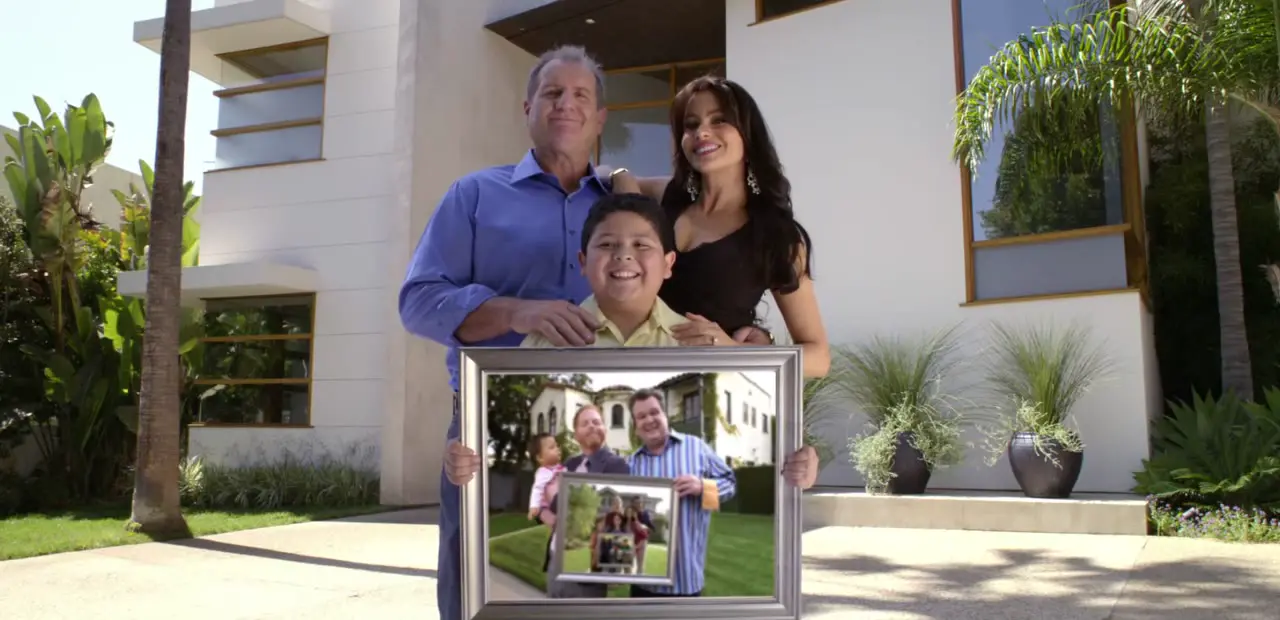
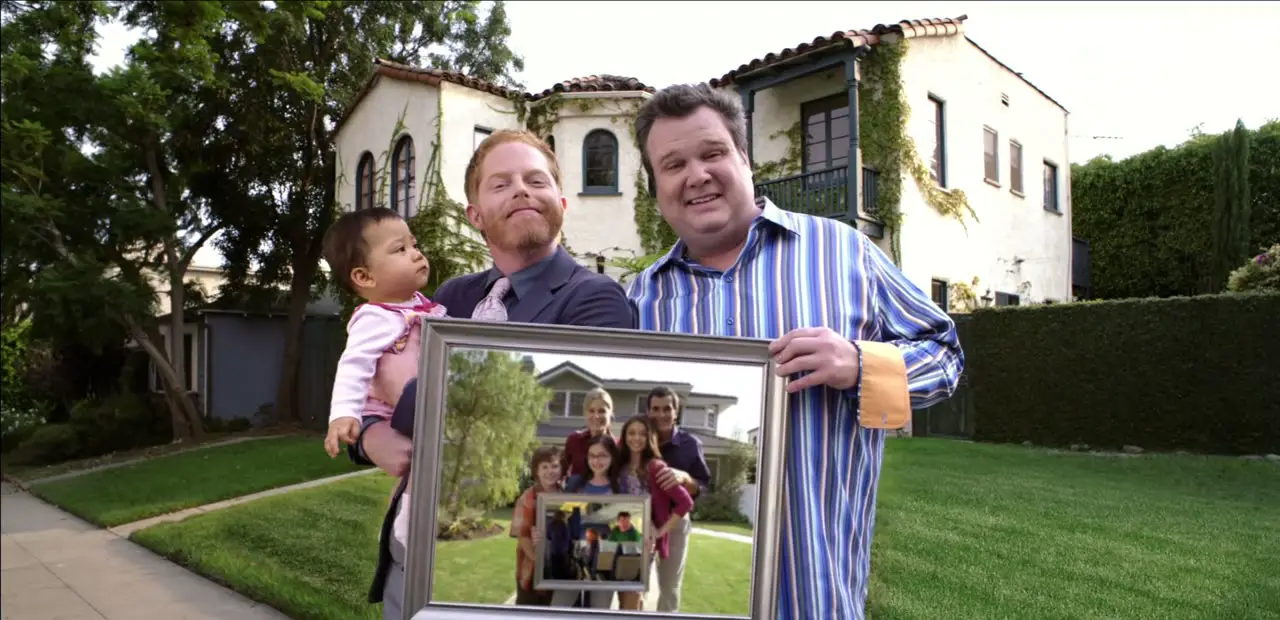
挑出 29 句含重点短语、词汇和笑点的台词。点 ▶ 听原声,听完填写、提交,绿色为对,红色为错。
做错的单词和短语会自动收进来,按错误类型分类并记录次数,错 2 次及以上标"高频"。记录只保存在你这台设备的浏览器里。
| 单词 / 短语 | 错误类型 | 次数 | 写成过 | 出处 |
|---|
29 句台词、56 个知识点:发音技巧、释义、用法、词根词缀、搭配、近反义词、同根派生、词典例句和易错点,穿插 12 道雅思 P1 串联题。
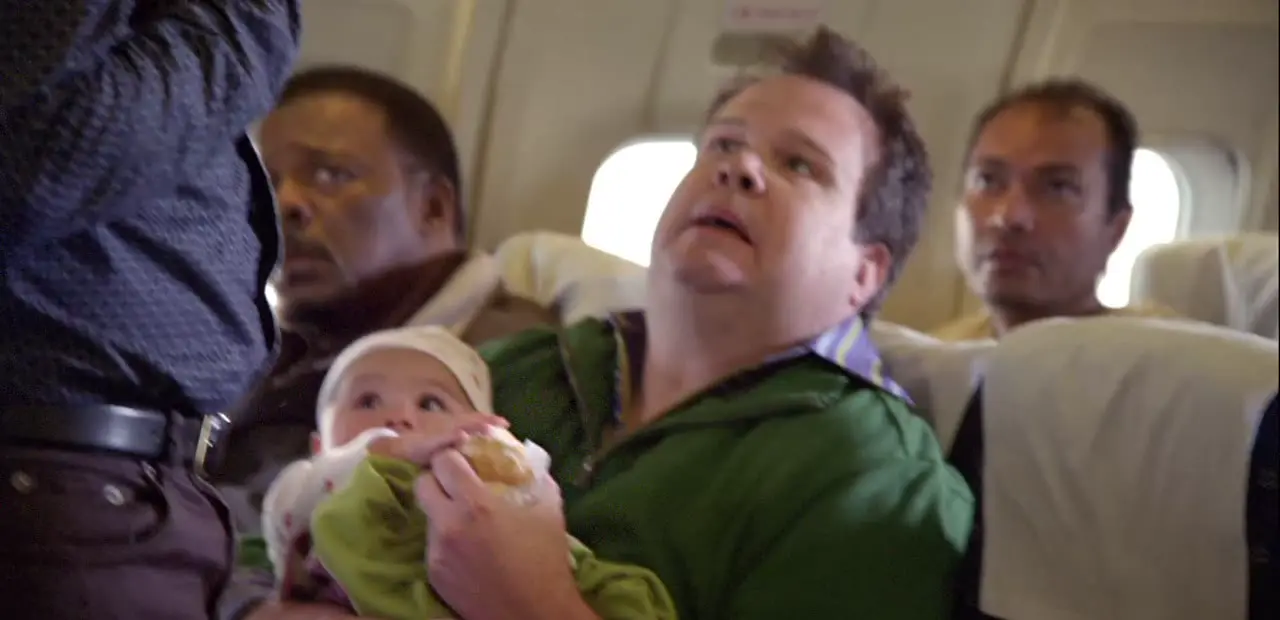
cream puff 本义是奶油泡芙,俚语里指"软弱、娘气的男人"。乘客说的是宝宝手里的泡芙,米奇尔却听成"瞧那宝宝,跟着两个娘炮",当场开讲平权演讲,结果被打脸。
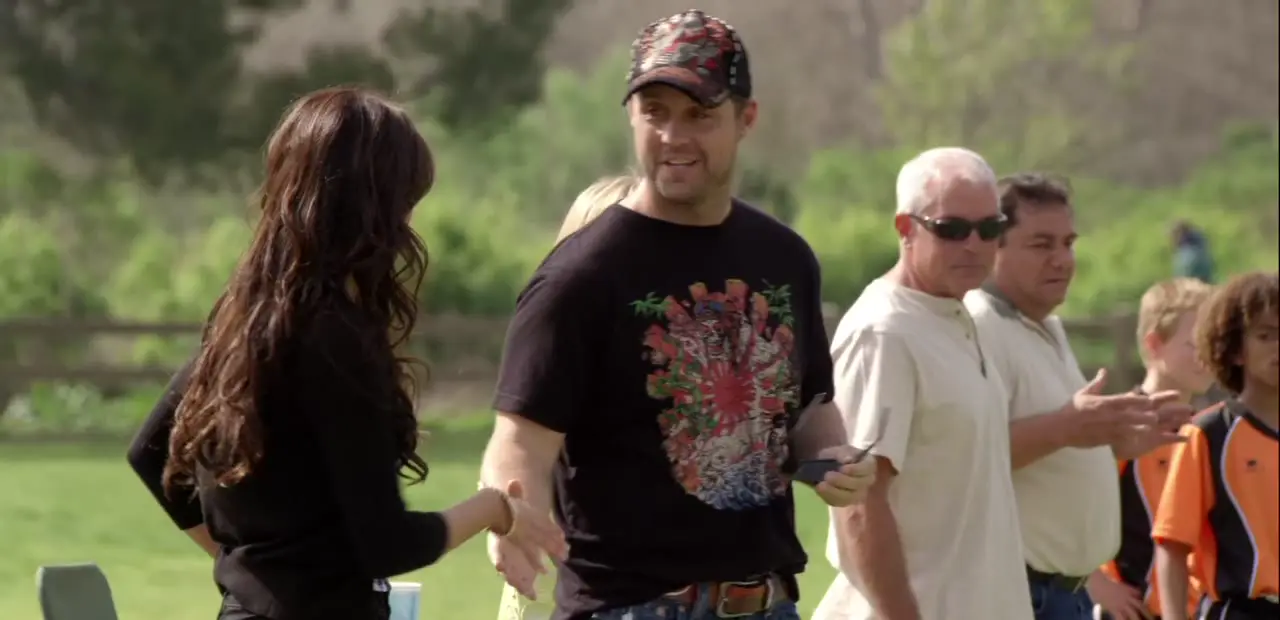
take a player out 是"把队员换下场",take sb out 在口语里还有"干掉、收拾某人"的意思。歌洛莉亚顺势反杀,火药味十足。
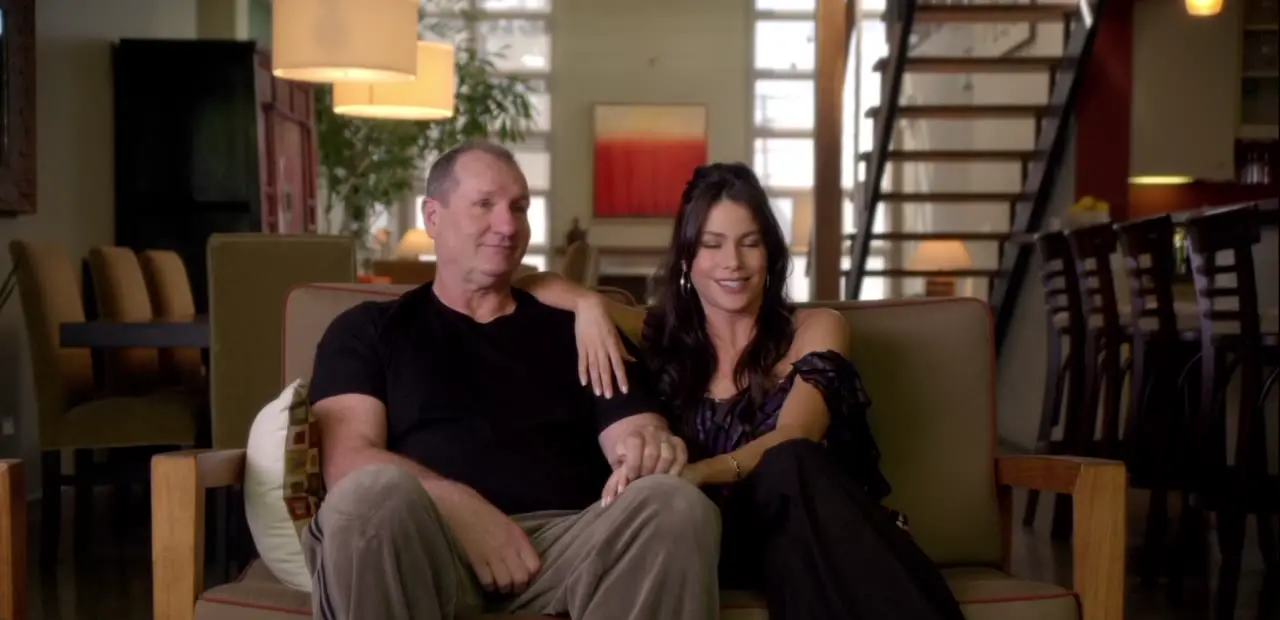
前面一路夸家乡"穷但美","全国第一"本该接好事,结果杰淡定补刀:"凶杀案。"歌洛莉亚还一本正经地确认。翻译时要保留"先扬后抑"的节奏,把"凶杀案"留到最后才说出来。

美式体育说战绩用"胜 and 负":0 and 6 是"零胜六负",即赛季六战全败。杰的意思是:这队本来就烂,别喊了。
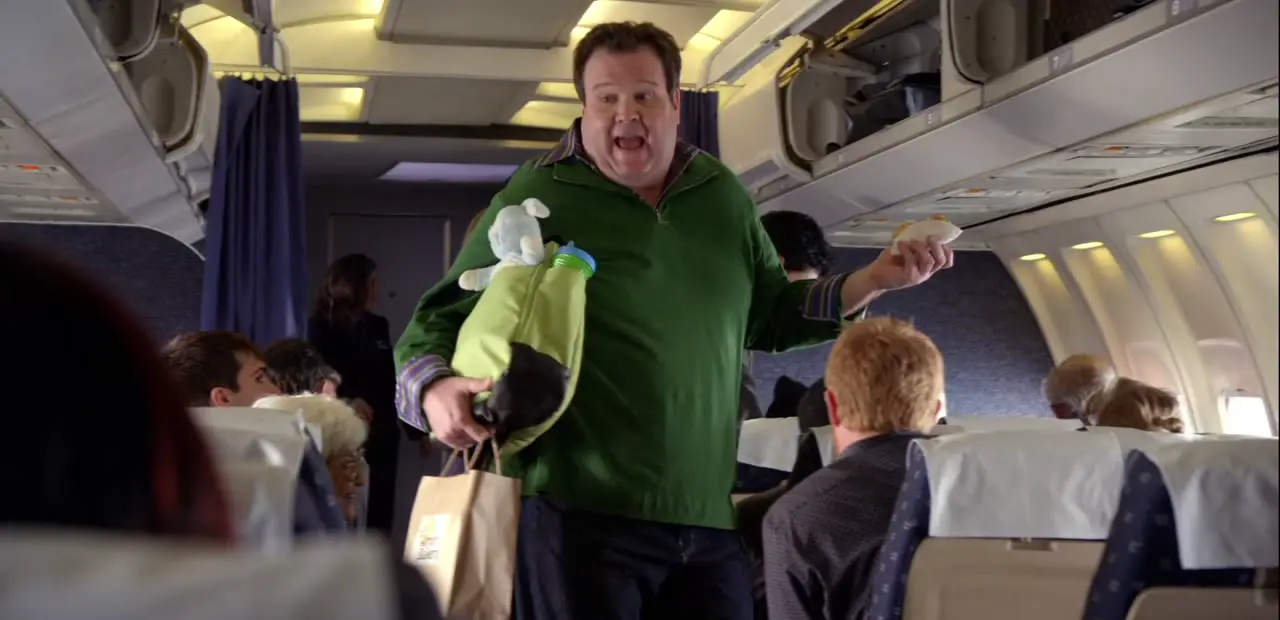
邻座默认米奇尔有个"太太",下一秒卡梅隆抱着零食高调登场,自称 Daddy,身份当场揭晓。笑点靠剪辑节奏,译文要短、要快。
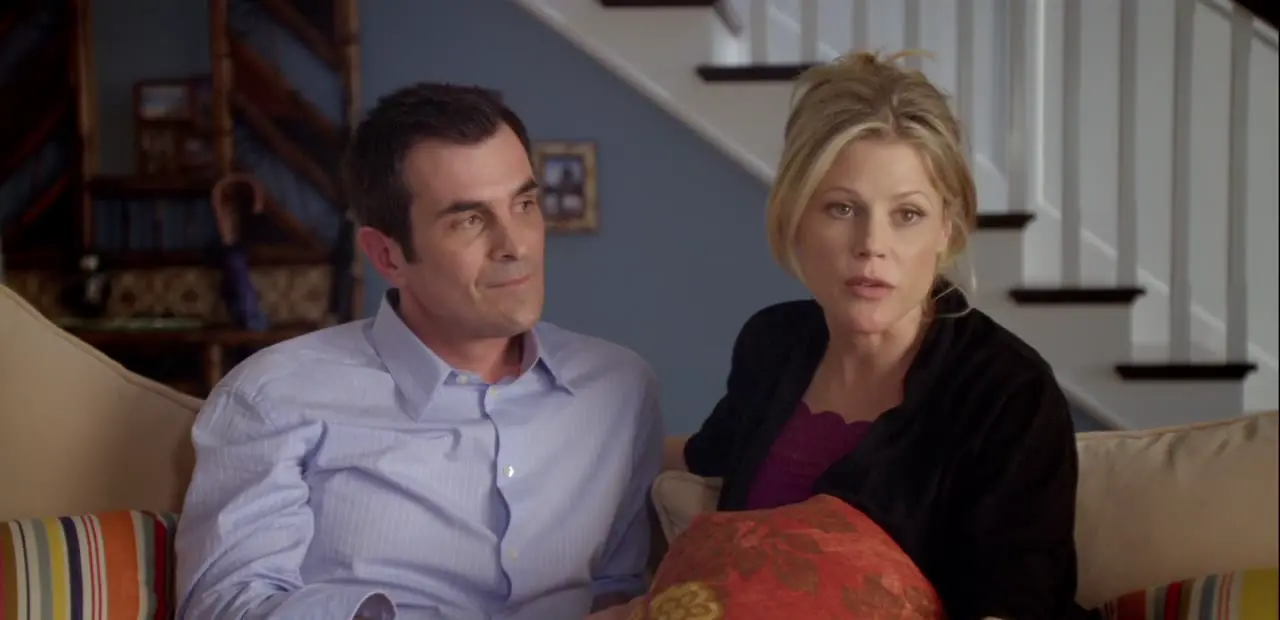
美国大学生春假(spring break)爱去佛罗里达海滩通宵狂欢。克莱尔暗示自己年轻时就干过这种事。紧接着菲尔纠正"是我们俩尽职了",她嘴上改口,说的却还是"我尽到了我们俩的职责",控场人设一句立住。
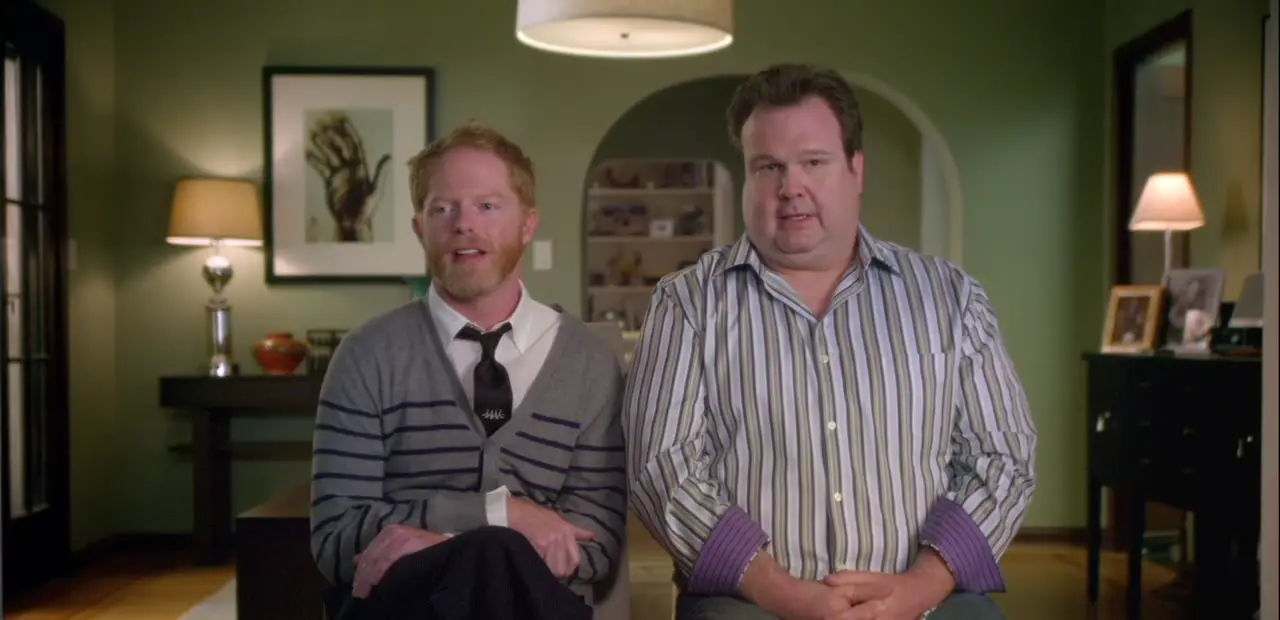
SkyMall 是美国航班座椅口袋里的购物目录,专卖电动领带架这类奇葩商品。米奇尔模仿乘客看到卡梅隆后假装埋头翻杂志的尴尬样子,讽刺他们突然不热情了。
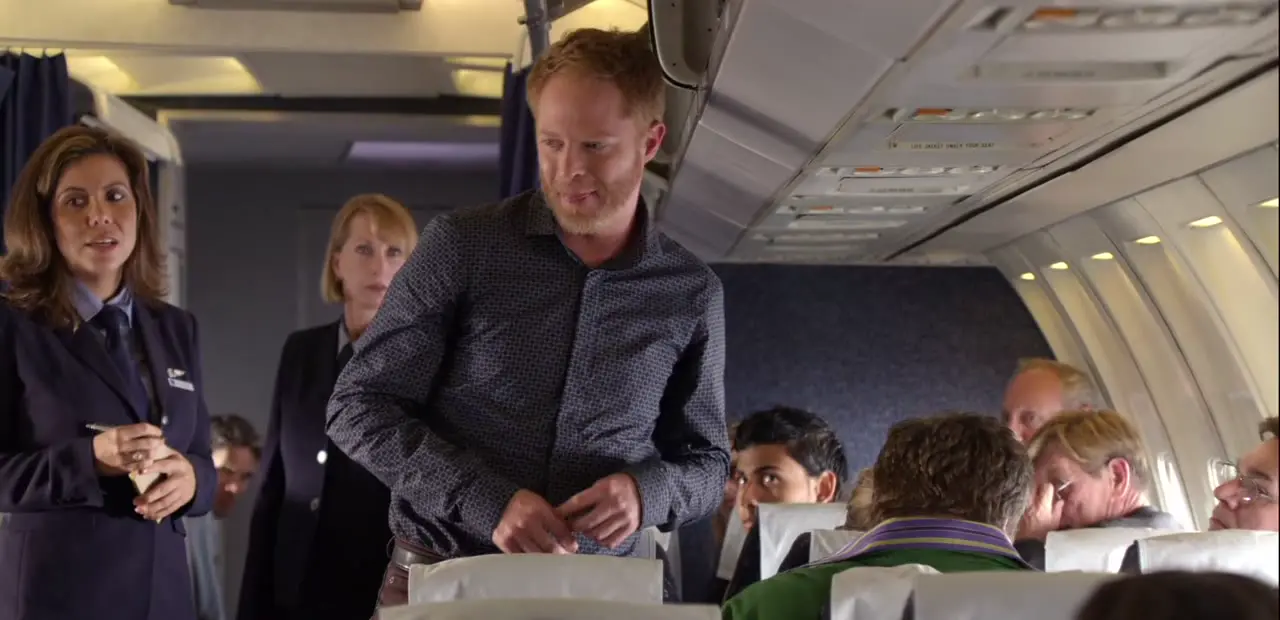
化用名句 Love knows no bounds(爱无边界),以及平权宣言里的经典表述 regardless of race, creed or colour。米奇尔把"肤色"换成"性别",一下子从吵架升级成了正式宣言,所以格外好笑。
77 句台词逐句精译,按人物性格和语境重新翻译。带色底的是精讲台词,点时间可以听原声。
先自己作答,再展开参考答案。译文会自动保存在本机。
口语题取自 2026 年 9–12 月雅思口语题库,只选和本集剧情真正对得上的题目。范文中高亮的是本期学到的表达。
Describe a time you made an important decision and were happy with the result描述一次你做出重要决定、并对结果感到满意的经历
You should say:你应该说:
What the decision was这个决定是什么
Why you made the decision你为什么做这个决定
How easy it was for you to make the decision做这个决定对你来说难不难
And explain why you were happy with the result并解释你为什么对结果感到满意
I'd like to talk about the time my family decided to adopt a rescue dog instead of buying a puppy.
Initially, we planned to get one from a breeder. But after a visit to a local shelter, we figured it made more sense to give a home to a dog that already needed one. On top of that, the adoption fee went towards looking after the other animals there, which made the choice feel even more worthwhile.
It wasn't an easy call, though. My dad was worried we'd be stuck with a dog with behaviour problems, and to be fair, the first week was pretty out of control: chewed shoes, barking at three in the morning, the lot.
Looking back, I'm really glad we went through with it. If it hadn't been for that decision, Mango, that's our dog, might still be in a cage. Now he's the calmest member of the family, and we were all thrilled with how quickly he settled in. It also taught me that you don't need a perfect pedigree to be a perfect fit. These days, whenever friends ask me whether they should adopt or buy, I always tell them it's one of the best decisions we've ever made.
我想讲讲我们家决定领养一只流浪狗、而不是去买小狗的事。
一开始,我们打算从犬舍买一只。可去了一趟本地的流浪动物收容所之后,我们觉得,与其花钱买,不如给一只本来就需要家的狗一个家。而且领养费会用来照顾收容所里的其他动物,这让我们觉得这个选择更有意义。
不过,这个决定做得并不轻松。我爸担心领回来的狗有行为问题,到时候甩都甩不掉。说实话,头一个礼拜确实乱成一团:鞋被啃坏,凌晨三点狂叫,什么状况都有。
现在回头看,我真的很庆幸当初坚持了下来。要不是那个决定,芒果(就是我们家的狗)现在可能还关在笼子里。如今它是家里最淡定的成员,看它这么快就适应了新家,全家人都高兴坏了。这件事也让我明白:血统不完美,照样可以是最合拍的家人。现在每当有朋友问我该领养还是买,我总会告诉他们,这是我们家做过的最好的决定之一。
Describe a noisy place you have been to描述一个你去过的嘈杂的地方
You should say:你应该说:
Where it is它在哪里
When you went there你什么时候去的
What you did there你在那里做了什么
And explain why you feel it's a noisy place并解释你为什么觉得那里很吵
The noisiest place I've been to recently is a community football pitch near my flat, where my cousin's ten-year-old son plays every Saturday morning.
I went to watch one of his matches a few weeks ago. I was expecting a relaxing morning in the sun, but I couldn't have been more wrong.
For a start, the kids themselves are loud. They shout for the ball non-stop, even when they're nowhere near it. But honestly, the parents are even louder. One mum spent the whole first half yelling instructions from the sideline, and when the referee didn't give a penalty, she started arguing with him. Someone asked her to take it down a notch, which only made her louder. On top of that, there's a busy road right next to the pitch, so there are horns and buses in the background the whole time.
Still, I didn't really mind. It was the kind of noise that comes from people who care, about the game and about their kids. And when my little nephew finally scored, I was cheering just as loudly as everyone else.
我最近去过最吵的地方,是我家附近的一个社区足球场。我表哥十岁的儿子每周六上午都在那儿踢球。
几个礼拜前,我去看了他的一场比赛。本以为能晒着太阳,悠闲地过一个上午,结果完全不是那么回事。
首先,孩子们本身就吵,整场都在喊着要球,哪怕球离他们八丈远。可说实话,家长比孩子还吵。有位妈妈整个上半场都在场边大声指挥,裁判没判点球,她还跟裁判吵了起来。旁边有人劝她收着点,她的嗓门反倒更大了。再加上球场边就是一条车来车往的大马路,喇叭声、公交车声从头到尾就没停过。
不过,我并不怎么反感。这种吵闹,是因为大家在乎:在乎比赛,更在乎自家孩子。等小表侄终于进球的时候,我也跟着大家一起扯着嗓子欢呼。
Parents have always worried about what their teenage children wear, where they go and who they spend time with. While some believe that strict control is the best way to keep young people safe, others argue that teenagers need the freedom to make their own choices. In my view, both sides have a point, but the most effective approach lies somewhere in between.
Those in favour of strict rules often speak from experience. Parents who were out of control in their own youth may simply not want their children to make the same mistakes. Clear rules about curfews, online safety and appropriate clothing can also protect teenagers from risks they are not yet mature enough to recognise, such as unsafe situations at parties or the pressure to grow up too fast.
On the other hand, rigid control can easily backfire. Teenagers who are constantly told off for their choices tend to rebel rather than reflect, and some start hiding things from their parents altogether. Moreover, adolescence is when young people learn to make judgements. If every decision is made for them, they will reach adulthood without the confidence or experience to manage their own lives.
In conclusion, I believe the healthiest approach is freedom within clear limits. Parents should set a few non-negotiable rules about safety, but let teenagers make low-risk choices, such as what to wear, on their own. That way, young people can learn from small mistakes, while their parents stay close enough to step in when it really matters.
十几岁的孩子穿什么、去哪儿、跟谁来往,向来是父母操心的事。有人认为严加管束最能保护孩子,也有人觉得青少年需要自由,该让他们自己拿主意。在我看来,双方都有道理,但最有效的做法介于两者之间。
主张严加管束的人,往往是有切身体会的。那些自己年少时就无法无天的父母,或许只是不希望孩子重蹈覆辙。而且,在几点前回家、上网安全、穿着得体等方面立下明确的规矩,也能帮孩子避开一些他们还没能力察觉的风险,比如聚会上的危险处境,或是被逼着过早成熟的压力。
另一方面,管得太死很容易适得其反。孩子做什么选择都挨训,往往只会更叛逆,而不是去反思,有的甚至干脆什么事都瞒着父母。况且,青春期正是学着自己拿主意的阶段。要是每个决定都由父母代劳,孩子长大成人后,既没有底气,也没有经验去打理自己的生活。
总之,我认为最健康的方式是"有边界的自由"。父母可以在安全问题上定几条没得商量的规矩,但像穿什么衣服这类风险不大的事,就放手让孩子自己决定。这样,孩子能从小错误里吸取教训,父母也守在身边,真到要紧关头能及时出手。
In recent decades, adoption has become an increasingly common way to start or grow a family in many countries. This shift has several causes, and in my opinion it is largely a positive development, provided that the process is properly regulated.
There are a number of reasons behind this trend. Firstly, more couples are marrying and trying for children later in life, and some find that having biological children is difficult or impossible. Secondly, families today come in many forms. Single parents and same-sex couples, who may not be able to have children in the traditional way, increasingly see adoption as their route to parenthood. Finally, greater awareness of how many children are growing up in care has encouraged some people to adopt simply because they want to give a child a stable home.
Overall, I believe this trend is beneficial. The most obvious winners are the children themselves. A child who would otherwise have grown up in a crowded orphanage gains the attention, security and opportunities that only a family can provide. Society benefits too, since children raised in loving homes are more likely to do well at school and grow into independent adults. That said, adoption must be carefully managed. Without strict checks, children could be placed with unsuitable families, and international adoption can sometimes involve unethical practices.
In conclusion, the rise in adoption reflects later parenthood, more diverse family structures and a stronger sense of social responsibility. As long as governments make sure the process always puts children's welfare first, it is a development to be welcomed.
近几十年来,在许多国家,领养越来越常见,成了组建或扩大家庭的一种方式。这一变化背后有多方面原因。在我看来,只要领养程序监管到位,它总体上是一种积极的发展。
这一趋势的形成有以下几个原因。首先,越来越多的夫妇结婚晚、要孩子也晚,其中一些人发现自己很难甚至无法生育。其次,如今的家庭形态多种多样。单亲父母和同性伴侣可能无法通过传统方式生育,越来越多的人把领养当作成为父母的途径。最后,人们逐渐意识到,有不少孩子正在福利机构里长大,于是有些人领养孩子,只是单纯想给孩子一个安稳的家。
总的来说,我认为这一趋势利大于弊。最直接的受益者就是孩子。一个原本要在人满为患的孤儿院里长大的孩子,能因此得到只有家庭才能给予的关爱、安全感和成长机会。社会也会从中受益,因为在充满爱的家庭里长大的孩子,更有可能学业有成,将来也更能独立生活。话虽如此,领养必须严格管理。如果把关不严,孩子可能被交到并不合适的家庭手里;跨国领养有时还可能涉及不正当的操作。
总之,领养增多,反映出生育年龄推迟、家庭结构日益多元,以及社会责任感的增强。只要政府确保领养程序始终把孩子的利益放在首位,这一趋势就值得欢迎。
Families today come in many forms, and they are made up of people with different ages, personalities and values. In such a setting, tolerance is not just a nice quality to have; it is what holds a family together.
To begin with, tolerance stops small disagreements from spiralling out of control. Whether the issue is a teenager's choice of clothes or a parent's old-fashioned habits, family members who accept each other's differences are far less likely to turn minor issues into major conflicts. In addition, a tolerant home gives everyone a sense of security. When children know they will not be judged for every mistake, they are more willing to share their problems and ask for advice. Just as love knows no race or gender, a happy family knows no single template.
Of course, tolerance does not mean accepting everything. Parents still need to set limits, and family members should still be honest with one another. However, if we learn to listen before we judge, our homes will become places of understanding rather than battlegrounds.
如今的家庭形态多种多样,家庭成员的年龄、性格和观念也各不相同。在这样的家里,包容不只是一种美德,更是维系一家人的纽带。
首先,包容能防止小分歧演变成大矛盾。不管是孩子的穿衣打扮,还是父母的老派习惯,只要家人能接纳彼此的不同,就很少会把小事闹成大冲突。其次,包容的家庭能给每个人安全感。孩子知道自己不会因为每一个错误被指责,就更愿意说出心里的烦恼,也更愿意找父母出主意。正如爱不分种族与性别,幸福的家庭也没有统一的模板。
当然,包容不等于什么都接受。父母仍然要立规矩,家人之间也仍要坦诚相待。但只要我们学会先倾听、再评判,家就会成为彼此理解的港湾,而不是硝烟弥漫的战场。
Dear Mrs Wang,
I am writing to apologise for the noise coming from my flat last Saturday night. Initially, I had planned a quiet birthday dinner with a few friends, but I am afraid the party got out of control and the music went on well past midnight. I can only imagine how frustrating it must have been to be kept awake.
To make sure this does not happen again, I will hold future celebrations somewhere else, or at least end them by ten o'clock. If you are ever disturbed again, please do not hesitate to knock on my door.
Yours sincerely,
Li Ming
王阿姨:
您好!上周六晚上我家太吵,打扰到您休息了,特地写信向您道歉。我原本只打算和几个朋友安安静静吃顿生日饭,没想到后来场面失控,音乐一直放到半夜过后。被吵得睡不着觉,您一定很烦心。
为了不再出现这种情况,以后再庆祝,我会换到别的地方,至少也会在十点前结束。今后要是再有打扰到您的时候,请您直接来敲门告诉我。
此致
敬礼!
李明
As is vividly depicted in the cartoon, two parents sit at the breakfast table with their eyes glued to their phones, while their teenage daughter shouts from upstairs, "Just text me!" Although the whole family is at home, nobody is really together. The scene initially raises a smile, but its message is worth thinking about.
The cartoon reveals an ironic reality: technology that was meant to bring people closer has quietly become a wall between those who live under the same roof. Messages are convenient, but they cannot replace eye contact, a shared laugh or a real conversation over breakfast. When family members talk to each other mainly through screens, misunderstandings grow and emotional bonds weaken.
In my view, the solution does not lie in rejecting technology but in using it wisely. Families could agree on a few simple rules, such as keeping phones off the table during meals or setting aside one evening a week to do something together. After all, a family is not a group chat. It is built on time and attention, and these are things no app can provide.
这幅漫画生动地描绘了这样一幕:父母坐在早餐桌前,各自埋头盯着手机;十几岁的女儿则在楼上喊:"有事给我发消息就行!"一家人明明都在家,心却没在一处。这一幕乍看让人发笑,细想却值得深思。
漫画揭示了一个颇具讽刺意味的现实:本该拉近人与人距离的科技,悄然在同一屋檐下的家人之间筑起了一道墙。发消息固然方便,却代替不了四目相对、一起开怀大笑,或是早餐桌上一场真正的交谈。家人之间要是主要靠屏幕说话,误会就会越来越多,感情也会越来越淡。
在我看来,解决之道不在于拒绝科技,而在于用好科技。一家人可以约定几条简单的规矩,比如吃饭时手机不上桌,或是每周留出一个晚上一起做点什么。毕竟,家不是一个微信群。家要靠时间和陪伴来经营,而这些,是任何应用程序都给不了的。
First Impressions: Useful but Unfair
We form first impressions within seconds of meeting someone. A stranger's clothes, accent or a single remark can lead us to decide whether they are friendly, clever or trustworthy. Such snap judgements may be natural, but I believe it is unfair to judge people by them, because first impressions are too often shaped by our own assumptions rather than by who the other person really is.
Admittedly, first impressions serve a purpose. In a world full of strangers, quick judgements help us decide whom to approach and whom to avoid, and sometimes they protect us from genuine danger. A job interviewer with thirty candidates to see in a single day, for instance, cannot possibly get to know each of them in depth.
However, the very speed that makes first impressions useful is what makes them unreliable. A well-known scene from the sitcom Modern Family illustrates this neatly. On a flight, a passenger sees a man holding a baby and assumes that he and his wife must be thrilled. Moments later, the man's male partner arrives with snacks. The same man then overhears a woman mention "cream puffs", decides that she is mocking him, and delivers an angry speech against prejudice, only to discover that she was talking about the pastries in the baby's hand. Both people judged too quickly, and both were wrong. The scene is funny precisely because we recognise ourselves in it.
More seriously, first impressions often expose our blind spots. Studies of job interviews have found that interviewers can be swayed by a candidate's appearance, accent or background in ways that have nothing to do with ability. When we rely on such impressions, we risk letting ignorance harden into prejudice and small-mindedness turn into unfair treatment.
Of course, we cannot simply switch off our instincts. What we can do is treat first impressions as hypotheses rather than verdicts: ask a question before reacting, give people a second chance, and notice when a judgement rests on a stereotype.
In conclusion, a first impression is a natural starting point but a poor final judgement. As the saying goes, never judge a book by its cover. If we stay open to the possibility that we are wrong, we will not only treat others more fairly but also spare ourselves a great deal of embarrassment.
第一印象:有用,却不公平
和一个人见面不过几秒钟,我们就会形成第一印象。陌生人的穿着、口音,甚至随口一句话,都可能让我们断定对方是否友善、聪明、靠得住。这种一瞬间的判断或许是人之常情,但我认为,凭第一印象评判别人并不公平,因为第一印象往往取决于我们自己的成见,而不是对方本来的样子。
诚然,第一印象自有它的用处。我们身边满是陌生人,快速判断能帮我们决定该接近谁、该远离谁,有时甚至能让我们避开真正的危险。比如,一位面试官一天要见三十个应聘者,根本不可能深入了解每一个人。
然而,第一印象之所以有用,是因为它快;它之所以靠不住,也恰恰因为它快。情景喜剧《摩登家庭》里有一场广为人知的戏,就很能说明问题。在飞机上,一位乘客看到一个男人抱着婴儿,便以为他和太太一定高兴坏了。没过一会儿,这个男人的同性伴侣抱着零食走了过来。随后,这位父亲又听到一位女士提起"奶油泡芙",认定她在嘲讽自己,于是怒气冲冲地发表了一通反对偏见的演讲,结果却发现,人家说的是宝宝手里的点心。两个人都判断得太快,也都判断错了。这场戏之所以好笑,正是因为我们从中看到了自己的影子。
往严肃里说,第一印象常常暴露出我们的盲区。有关招聘面试的研究发现,面试官可能会受到应聘者外貌、口音或出身的影响,而这些都和能力毫不相干。如果依赖这样的印象,我们就可能让无知固化成偏见,让狭隘变成对别人的不公。
当然,我们没法把直觉一关了之。但我们可以把第一印象当作有待验证的猜测,而不是最终的结论:先问一句再做反应,给别人第二次机会,留意自己的判断是不是出自刻板印象。
总之,第一印象是一个自然的起点,却是一个糟糕的终点。俗话说,人不可貌相。只要我们愿意承认自己可能看错,不仅能更公平地对待他人,也能让自己少出不少洋相。
台词与剧照出自美剧《摩登家庭》(Modern Family)第一季第一集,版权归原版权方所有,本资料仅节选用于英语学习讲解。中文精译、精学讲解、精练与运用部分均为 @Yumi的学习频道 原创内容,仅供个人学习,禁止抄袭、搬运或转载,违者必究。口语题目来源:2026 年 9–12 月雅思口语题库。